
AutoDrone and the Next Layer of Industrial Autonomy
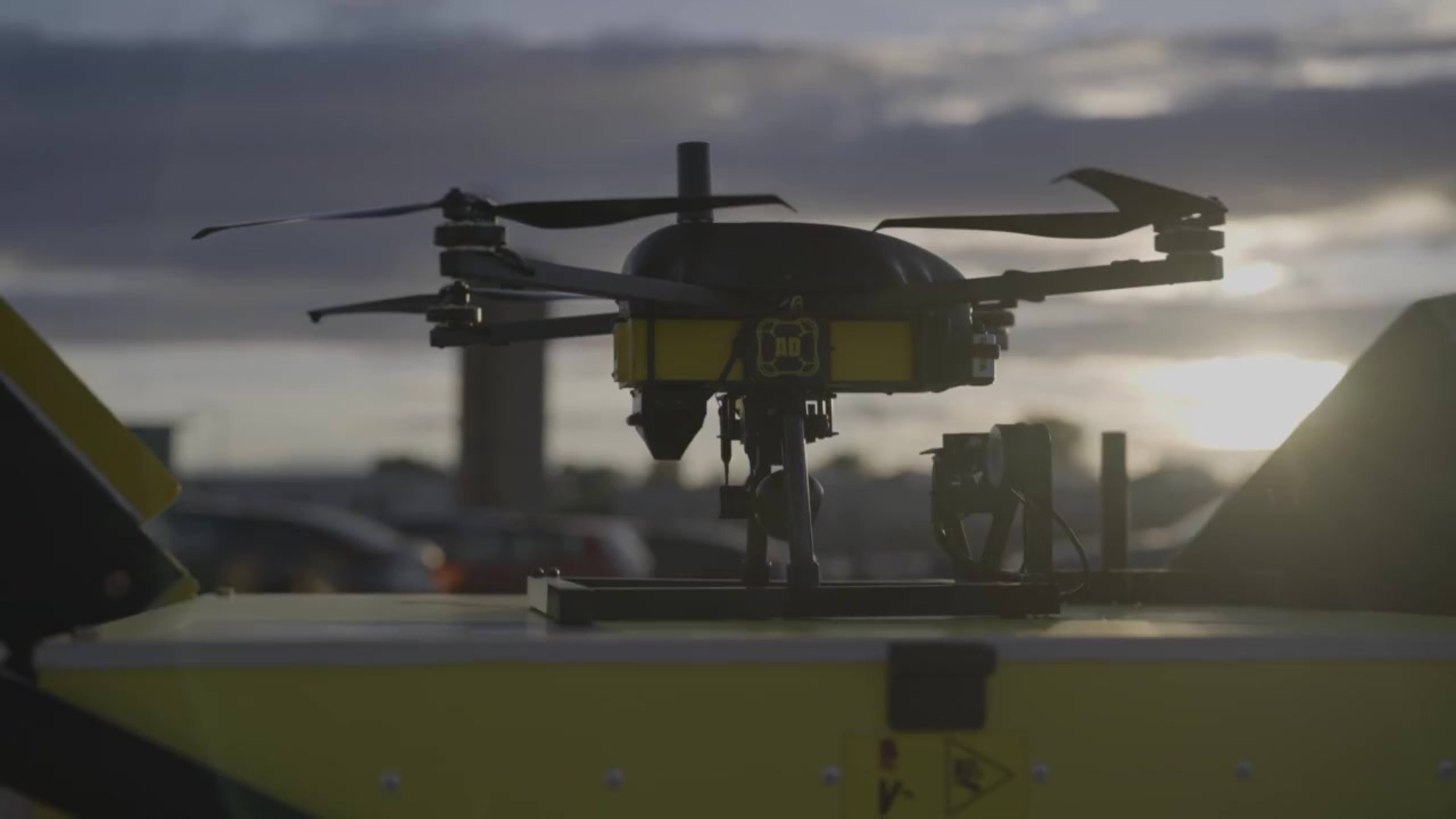
A few years ago, the impressive part of an industrial drone system was the box. A weatherproof dock could open, release an aircraft, send it along a programmed route and receive it again for charging, all without someone standing beside it. That was enough to make automation feel futuristic. It no longer does. DJI now sells Dock 3 for remote industrial operations, Nokia has a European-made 5G drone-in-a-box platform, and Percepto offers autonomous inspection systems for energy and heavy industry. The more interesting question now begins after take-off: what makes one of these systems useful enough, reliable enough and trusted enough to become part of how a site actually works?
AutoDrone approaches that question from Szeged, Hungary. It develops industrial drones and proprietary docking technology, but its proposition extends beyond the aircraft. Site assessment, regulatory preparation, private-network operation, maintenance and system integration all sit around the flight itself. In solar, a partnership with TerraSky.ai connects automated flights to thermal and visual analysis that can identify faulty panels and estimate the loss associated with them. The box still matters, but AutoDrone’s opportunity lies increasingly in everything that has to work around it.
When the Box Becomes the Baseline
AutoDrone’s Kerberos aircraft and Hades dock give it control over more of the hardware stack than a service company assembling third-party products. Yet the competitive field already offers credible alternatives. DJI automates recurring inspection missions and data upload through Dock 3; Percepto combines resident drones with cloud software, analytics and remote operations; Nokia adds private and public 4G and 5G connectivity and third-party application integration. Launch, land, recharge and repeat are no longer enough to define a winner.
That changes the buying conversation. An industrial customer is not purchasing a flight for its own sake. AutoDrone begins with what the site needs to see, which sensor is appropriate, where a dock should sit and what permissions the operation requires. The same platform can be configured around perimeter security, solar inspection or another monitoring task.
That same logic extends into the systems already running the site. AutoDrone integrates drone operations with video-management, physical-security, access-control, alarm and sensor systems rather than treating the aircraft as another isolated interface. A security team may welcome another set of eyes; it is less likely to welcome another disconnected screen.
What Happens After Take-Off
Solar makes the distinction clearer. TerraSky.ai uses AutoDrone-developed Kerberos aircraft with Hades for automated remote monitoring, then analyses thermal and visual data to locate faulty panels and estimate associated losses. The flight is the collection stage. The useful output is knowing where attention is needed and what the problem may be costing.
That partnership suggests a scalable role for AutoDrone. It does not have to become the deepest specialist in every industry if its robotic platform can give specialist partners a dependable way to reach the asset. In security, that means fitting into alarms, cameras and access systems. In solar, it can mean supplying consistent aerial data for analysis.
Reliability becomes more important at that point than spectacle. Maintenance, lifecycle cost and continuing support sit at the centre of AutoDrone’s operating model. A demonstration can tolerate engineers standing nearby. A system sold to reduce routine intervention cannot create a new routine in which technicians are constantly sent out to rescue it. The commercial test is whether the wider system keeps producing useful work when nobody is treating the flight as an event.
Europe Starts Asking Who Built It
That operating question is beginning to overlap with a policy one. In February 2026, the European Commission’s Drone and Counter-Drone Security Action Plan proposed risk assessments aimed at avoiding high-risk suppliers, investment to expand European production and an “EU trusted” label for secure equipment. The same agenda treats drones as valuable tools and as potential risks around critical infrastructure.
For AutoDrone, that makes some less visible choices more commercially relevant. Encrypted private-network operation sits alongside in-house hardware and software development, while full-EU product versions address customers with stricter security or compliance requirements. An aircraft repeatedly watching an energy or industrial site is also a connected sensor with access to sensitive information.
Nokia already foregrounds European manufacture, private-network connectivity and edge processing in its automated-drone offer. Being European is therefore not a differentiation by itself. The opportunity lies in making provenance, network control and security useful to customers just as Europe is attaching greater strategic weight to them. The Commission’s current review of Drone Strategy 2.0 reflects how quickly that environment is changing.
The Difficult Flight Is Across the Border
AutoDrone’s expansion path runs from Hungary through Central and Eastern Europe before reaching into the wider EU. Shipping an aircraft across those borders is the easy part. Moving the operating model is harder.
Each market brings different clients, integrations, regulations and expectations of support. A company that adapts closely to one site can look impressively flexible; a company that has to reinvent every deployment will struggle to scale. AutoDrone’s planned cloud fleet management, stronger detection tools and deeper integrations therefore matter less as extra features than as attempts to turn knowledge gathered project by project into something repeatable.
Its small, competence-led culture enters the story here. Decisions are pushed towards whoever has the relevant expertise rather than being determined by fixed hierarchy, an approach suited to a team developing hardware and software with limited resources. Expansion will test the other side of that advantage: whether speed can become process without becoming bureaucracy, while each new site benefits from what the last one taught the company.
AutoDrone is taking an operating capability built in Hungary into industries where automated flight is becoming easier to procure and harder to differentiate. The dock may still be the object a visitor notices first. If the model travels successfully, the stronger sign will be that clients eventually notice something else: the drone has become so embedded in security or inspection that the box itself is no longer the reason they bought it.