
INVERSUS CAPITAL LTD in an Age of Selective Capital
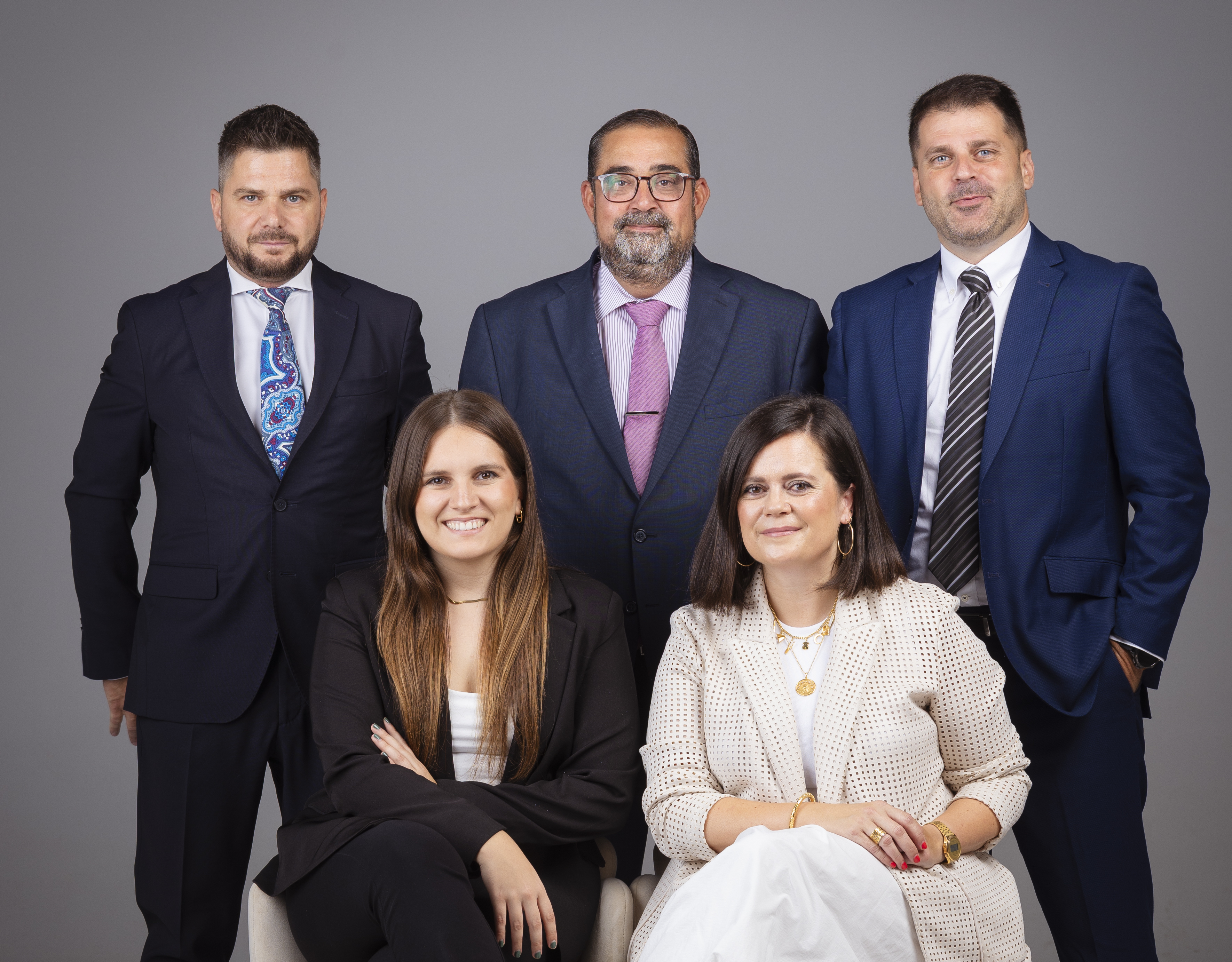
The global financial crisis reshaped the architecture of European capital markets in ways that continue to influence investment behaviour. Traditional banking institutions reduced risk exposure, credit conditions tightened, and access to financing for small and medium-sized enterprises became more constrained. At the same time, retail savings accumulated in low-yield instruments, creating a widening gap between available capital and productive opportunity. It was within this environment in 2010 that INVERSUS CAPITAL LTD emerged, positioning itself as a financial intermediary focused exclusively on directing private capital into tangible sectors of the real economy.
The structural tension remains relevant. Idle savings coexist with capital-intensive needs in healthcare, real estate and international trade. Alternative finance has expanded to address that imbalance, yet questions of governance, alignment and risk discipline persist. INVERSUS operates through a co-investment model that seeks to align investor participation with project execution, emphasising sector specialisation and structured analysis rather than broad financial engineering. The substance of that approach becomes clearer when viewed through the sectors it prioritises, the architecture of its investment model and the regional strategy now taking shape.
Capital Reallocation and the Real Economy
The imbalance between accumulated savings and productive demand did not resolve itself as financial markets stabilised. In several European economies, particularly across Southern Europe, small and medium-sized enterprises continued to face constrained access to traditional bank credit. At the same time, demographic pressures and structural reform agendas increased the capital requirements of healthcare systems, while real estate markets entered phases of restructuring and selective redevelopment. International trade, especially among mid-sized operators, required working capital and structured financing that larger institutions were often unwilling to provide without substantial collateral.
In this environment, alternative intermediation became less a peripheral innovation and more a functional necessity. INVERSUS positioned itself within that gap, concentrating exclusively on sectors where assets are tangible and operational realities are measurable. Healthcare infrastructure, real estate development and international trade represent areas where capital deployment links directly to economic activity. By limiting its scope to the real economy rather than financial derivatives or speculative instruments, the firm seeks to reduce abstraction in its portfolio construction and maintain a clearer relationship between capital and output.
Such sector concentration carries both opportunity and responsibility. The real economy is less insulated from cyclical pressures, yet it is also less detached from underlying demand. The relevance of this approach depends not only on identifying sectors in need of capital, but on how that capital is structured and governed.
The Architecture of Co-Investment
Central to INVERSUS’s model is co-investment. Rather than acting solely as a distributor of products, the firm participates alongside its clients in selected projects. In principle, this alignment seeks to narrow the distance between capital allocation decisions and capital exposure. Where the intermediary shares in the same risk profile as its investors, incentives are more closely aligned.
This structure, however, requires discipline. Project selection must be rigorous, and sector expertise must be substantive rather than nominal. INVERSUS emphasises market analysis, contingency planning and iterative strategic review before committing capital. The development of an investment plan is treated as a dynamic process rather than a static prospectus, reflecting the reality that conditions evolve over time.
Financial intermediation, particularly in alternative markets, carries high barriers to entry not only in regulatory terms but in credibility. The sustainability of a co-investment model depends on maintaining investor confidence through transparency and structured oversight. In this respect, specialisation functions as a risk-mitigation tool. By narrowing its operational focus, the firm reduces dispersion of expertise and concentrates analytical resources where it claims to hold competitive understanding.
The question is not whether alternative finance can generate returns, but whether it can do so without replicating the opacity that characterised segments of pre-crisis markets. Architecture, not access alone, determines the answer.
Trust, Transparency and Market Positioning
The expansion of alternative finance has unfolded alongside a degree of scepticism. Retail investors, particularly those whose savings were affected by past financial dislocations, increasingly scrutinise not only projected returns but governance standards and alignment of interest. In this context, differentiation cannot rest solely on performance metrics. It must extend to communication, transparency and operational integrity.
INVERSUS articulates its positioning around a human-centred approach to finance, though in policy terms this translates into relational continuity and long-term engagement rather than transactional distribution. The firm’s internal culture, which emphasises values alongside performance, is presented as foundational rather than ornamental. Profitability is described as a consequence of disciplined, client-focused work rather than the sole objective.
Technology also features in this positioning. While not positioned as a disruptive platform in the venture-backed sense, the firm integrates digital tools and data analysis to enhance project evaluation and operational efficiency. In a sector where scale can quickly outpace oversight, incremental technological integration serves as a means of maintaining control rather than accelerating complexity.
The combined effect is an attempt to normalise alternative intermediation as a structured extension of capital markets rather than an opportunistic substitute. Whether that positioning holds depends on execution across cycles rather than rhetoric in favourable conditions.
Regional Expansion and Institutional Durability
Growth plans extending into Portugal and Italy signal an ambition to operate across a broader Southern European corridor. Cross-border expansion in alternative finance introduces additional layers of regulatory coordination, currency exposure and market differentiation. It also reflects recognition that capital flows within the region are increasingly interconnected, particularly in sectors such as healthcare infrastructure and real estate.
Regional integration, however, is not solely geographic. It requires institutional durability. Firms operating in the alternative space must demonstrate that their models are resilient under stress and adaptable to regulatory evolution. The incorporation of artificial intelligence and continued refinement of internal processes suggest a focus on operational scalability without abandoning sector concentration.
Founded in a period of financial instability, INVERSUS presents itself as a product of constrained credit conditions rather than speculative exuberance. Its future trajectory will depend on whether it can maintain disciplined intermediation as it scales, preserving alignment between private savings and productive assets across jurisdictions. In a fragmented credit landscape where traditional banking remains selective and alternative capital continues to expand, the long-term significance of such models lies in their ability to channel capital responsibly into sectors that sustain economic activity.